
Buying Guide
Best 3D Printer for Terrain
Resin printers are the right tool for miniatures. Terrain is a different problem. Buildings, hills, and gaming boards need volume, sturdy plastic, and reasonable running costs more than they need single digit micron detail. That means FDM, not resin, for almost everything on a tabletop larger than a unit leader.
Page last reviewed: 17 April 2026
Some links on this page are affiliate links — marked with aff — and if you buy through them I may earn a small commission at no extra cost to you. Read the full disclosure.
Why FDM, not resin, for terrain
Resin is perfect for small, detailed, handheld models. For terrain, the maths stops working. A two hundred millilitre tower costs more to print in resin than a full army of infantry, cures into a brittle shell, takes a full day on the build plate, and will not survive the second gaming night after a dice bag falls on it.
FDM solves all of that. A kilogram of PLA costs roughly the same as a small bottle of resin and prints ten times the volume. Parts flex rather than shatter when dropped. Large pieces can be printed in a single pass on any modern machine with a reasonable plate. And the finish, once primed, is more than good enough for anything larger than a shoulder pauldron.
Resin still has a place for terrain. Intricate pieces like statues, gargoyles, latticework, and finely detailed doors benefit from the extra sharpness. The rule of thumb is simple: if the piece fits comfortably in one hand and the detail is the point, print it in resin. Everything else goes on the FDM plate.
What makes a good FDM printer for terrain?
The priorities for terrain are almost the opposite of the priorities for miniatures. Build volume and speed matter much more than raw detail. Here is what actually affects whether a given printer is a good terrain machine.
Build volume
Terrain is big. A single ruined building or a large hill piece can easily push past the edges of a 220 mm plate. The sweet spot for a first FDM printer is 250 mm cubed, which covers roughly ninety per cent of the terrain STLs available. Anything above 300 mm cubed is a genuine upgrade and opens up larger single piece prints.
Modular terrain sidesteps the problem by design, breaking a large piece into smaller tiles. Most modern terrain ranges are built this way, so a mid size plate is rarely a hard ceiling.
Print speed and reliability
Terrain prints are long. A full building can easily be eight to twelve hours on the plate. A printer that fails at hour nine has wasted the entire job, and the filament cost, and the evening. Speed matters, but reliability matters more. The best terrain printers finish what they start, every time, without checking.
Core XY machines are faster and more stable at speed than the older bed slinger layout. Most current generation machines on this list manage 300 mm per second or more in practice, which is enough to print a tower in an afternoon.
Enclosed chamber
An enclosure matters for two reasons. First, it keeps heat around the print, which is the difference between PLA working well and ABS or ASA working at all. ASA is the material for garden terrain, battle boards, and anything that needs to survive a sunny day on a patio, and it will not print reliably on an open frame.
Second, an enclosure keeps noise, smell, and fine particulates down. If the printer shares a room with you or anyone else, the enclosure is what makes that liveable.
Multi material support
Multi colour terrain is the single biggest quality of life upgrade in the last two years of FDM printing. Printing a building in stone grey, with wood brown doors, oxidised copper roof trim, and red banner cloth, all in one pass, removes an enormous amount of hand painting work. It does not replace painting, but it makes the painting step much faster.
Bambu Lab's AMS and AMS lite are the mature options. Other brands are catching up. Worth paying the extra on day one if the budget allows, rather than adding it later.
Bed levelling and first layer
Terrain pieces often have small footprints or thin walls. A poor first layer peels, warps, or simply fails to stick, and the whole print follows. Automatic bed levelling has become reliable on the major brands in the last two years. On a terrain focused printer it is no longer a luxury, it is the feature that stops you wasting afternoons.
Filament ecosystem
Generic PLA runs on everything. That is not the question. The question is whether the printer handles the more useful materials: PETG for durability, ASA for outdoor use, TPU for flexible bits like command banners, carbon reinforced filaments for structural sections. A sealed enclosure and a hardened nozzle open up most of these without fuss.
Software and community
A good slicer with sensible defaults turns a three day tuning project into a ten minute prep. Bambu Studio and Orca Slicer are the two current benchmarks. A healthy community with tested profiles for common terrain ranges saves further time again.
Top picks
The three printers I recommend right now
These are the three FDM printers worth buying today for tabletop terrain. Prices are typical street prices in USD and move with sales.
Best budget pick
Bambu Lab A1
Fast, reliable, and forgiving. Auto levelling actually works, the bed is generous enough for most buildings, and the AMS lite lets you add cheap multi colour for walls, roofs, and trim. The printer I would put in front of a hobbyist who has never touched FDM.
- Build volume
- 256 × 256 × 256 mm
- Style
- Open frame bed slinger
- Best price seen
- $299
Best all rounder
Bambu Lab P1S
Enclosed chamber, core XY motion, and the same AMS ecosystem as the A1. The enclosure is what matters for terrain: it lets you run ASA and ABS for weatherproof garden terrain without warping. Quiet enough to leave running overnight in a shared room.
- Build volume
- 256 × 256 × 256 mm
- Style
- Enclosed core XY
- Best price seen
- $599
Best for large builds
Elegoo Centauri Carbon
A 256 mm cubed enclosed core XY at a price that undercuts the Bambu equivalents by a meaningful margin. The software ecosystem is less polished than Bambu, but the enclosed chamber and CoreXY motion deliver a build experience that holds up against the P1S for terrain work.
- Build volume
- 256 × 256 × 256 mm
- Style
- Enclosed core XY
- Best price seen
- $299
Full comparison
FDM printer comparison table
All current FDM printers worth considering for terrain printing, with key specs side by side. Use the brand filter to narrow the list. Prices are the lowest street price seen in USD. Out of stock rows are dimmed.
| Printer | Brand | Build volume (mm) | Enclosure | Multi colour | Auto level | Input shaping | Top speed (mm/s) | Min layer (µm) | Air filter | Wi-Fi | Camera | Best price (USD) | Verdict |
|---|---|---|---|---|---|---|---|---|---|---|---|---|---|
| Anycubic Kobra 3 Max | Anycubic | 420 x 420 x 500 | Open | No | Yes | No | 600 | 50 | No | Yes | Yes | $459 | — |
| Anycubic Kobra 3 Max Combo | Anycubic | 420 x 420 x 500 | Open | Yes | Yes | No | 600 | 50 | No | Yes | Yes | $599 | — |
| Anycubic Kobra S1 | Anycubic | 250 x 250 x 250 | Enclosed | No | Yes | Yes | 600 | 50 | No | Yes | 480P | $349 | — |
| Anycubic Kobra S1 Combo | Anycubic | 250 x 250 x 250 | Enclosed | Yes | Yes | Yes | 600 | 50 | No | Yes | 480P | $429 | — |
| Anycubic Kobra S1 Max | Anycubic | 350 x 350 x 350 | Enclosed | No | Yes | Yes | 600 | 50 | No | Yes | 720P | $699 | — |
| Anycubic Kobra S1 Max Combo | Anycubic | 350 x 350 x 350 | Enclosed | Yes | Yes | Yes | 600 | 50 | No | Yes | 720P | $899 | — |
| Anycubic Kobra X | Anycubic | 260 x 260 x 260 | Open | Yes | Yes | No | 600 | 50 | No | Yes | 720P | $299 | — |
| Anycubic Kobra X Combo | Anycubic | 260 x 260 x 260 | Open | Yes | Yes | No | 600 | 50 | No | Yes | 720P | $449 | — |
| Bambu Lab A1 | Bambu Lab | 256 x 256 x 256 | Open | Yes | Yes | Yes | 500 | 80 | No | Yes | Yes | $299 | — |
| Bambu Lab A1 Mini | Bambu Lab | 180 x 180 x 180 | Open | Yes | Yes | Yes | 500 | 80 | No | Yes | Yes | $199 | — |
| Bambu Lab H2D | Bambu Lab | 350 x 320 x 325 | Enclosed | Yes | Yes | Yes | 600 | 80 | Yes | Yes | Yes | $1,899 | — |
| Bambu Lab P1S | Bambu Lab | 256 x 256 x 256 | Enclosed | Yes | Yes | Yes | 500 | 80 | Yes | Yes | Yes | $599 | — |
| Creality CR-M4 | Creality | 450 x 450 x 470 | Open | No | Yes | No | 200 | 100 | No | Yes | No | $999 | — |
| Creality Ender 3 V3 KE | Creality | 220 x 220 x 240 | Open | No | Yes | Yes | 500 | 100 | No | Yes | No | $259 | — |
| Creality Ender 3 V3 SE | Creality | 220 x 220 x 250 | Open | No | Yes | No | 250 | 100 | No | No | No | $169 | — |
| Creality Hi | Creality | 260 x 260 x 300 | Open | Yes | Yes | Yes | 500 | 100 | No | Yes | No | $299 | — |
| Creality K1 Max | Creality | 300 x 300 x 300 | Enclosed | Yes | Yes | Yes | 600 | 100 | Yes | Yes | Yes | $799 | — |
| Creality K1C | Creality | 220 x 220 x 250 | Enclosed | Yes | Yes | Yes | 600 | 100 | Yes | Yes | Yes | $499 | — |
| Creality K2 Plus | Creality | 350 x 350 x 350 | Enclosed | Yes | Yes | Yes | 600 | 50 | Yes | Yes | Yes | $1,499 | — |
| FlashForge AD5X | FlashForge | 220 x 220 x 220 | Open | Yes | Yes | No | 600 | 100 | No | Yes | No | $339 | — |
| FlashForge Adventurer 5M | FlashForge | 220 x 220 x 220 | Open | No | Yes | Yes | 600 | 100 | No | Yes | No | $299 | — |
| FlashForge Adventurer 5M Pro | FlashForge | 220 x 220 x 220 | Enclosed | No | Yes | Yes | 600 | 100 | Yes | Yes | Yes | $449 | — |
| Phrozen Arco | Phrozen | 300 x 300 x 300 | Open | No | Yes | Yes | 1000 | — | No | Yes | 720P | $775 | — |
| Original Prusa MINI+ | Prusa | 180 x 180 x 180 | Open | No | Yes | Yes | — | 50 | No | Yes | No | $429 | — |
| Original Prusa MK4S | Prusa | 250 x 210 x 220 | Open with shroud kit | Yes | Yes | Yes | — | 50 | No | Yes | No | $929 | — |
| Original Prusa XL | Prusa | 360 x 360 x 360 | Open with shroud kit | Yes | Yes | Yes | — | 50 | No | Yes | No | $2,299 | — |
| Prusa CORE One+ | Prusa | 250 x 220 x 270 | Enclosed | Yes | Yes | Yes | — | 50 | No | Yes | No | $999 | — |
| Sovol SV06 ACE | Sovol | 220 x 220 x 250 | Open | No | Yes | Yes | 600 | — | No | Yes | Yes | $239 | — |
| Sovol SV06 Plus ACE | Sovol | 300 x 300 x 350 | Open | No | Yes | Yes | 500 | — | No | Yes | 480P | $299 | — |
| Sovol SV08 | Sovol | 350 x 350 x 345 | Open with shroud kit | No | Yes | Yes | 700 | 80 | No | Yes | Yes | $549 | — |
| Sovol SV08 Max | Sovol | 500 x 500 x 500 | Open with shroud kit | No | Yes | Yes | 700 | — | No | Yes | 720P | $1,099 | — |
| Sovol Zero | Sovol | 152 x 152 x 152 | Enclosed | No | Yes | Yes | 1200 | — | Yes | Yes | Yes | $389 | — |
| Anycubic Kobra 2 Out of stock | Anycubic | 220 x 220 x 250 | Open | No | Yes | No | 300 | 100 | No | No | No | $169 | — |
| Anycubic Kobra 2 Pro Out of stock | Anycubic | 220 x 220 x 250 | Open | No | Yes | No | 500 | 100 | No | Yes | No | $309 | — |
| Bambu Lab P1P Out of stock | Bambu Lab | 256 x 256 x 256 | Open with shroud kit | Yes | Yes | Yes | 500 | 80 | No | Yes | Yes | $599 | — |
| Bambu Lab X1 Carbon Out of stock | Bambu Lab | 256 x 256 x 256 | Enclosed | Yes | Yes | Yes | 500 | 80 | Yes | Yes | Yes | $1,199 | — |
| Bambu Lab X1E Out of stock | Bambu Lab | 256 x 256 x 256 | Enclosed | Yes | Yes | Yes | 500 | 80 | Yes | Yes | Yes | $2,499 | — |
| Elegoo Centauri Carbon Out of stock | Elegoo | 256 x 256 x 256 | Enclosed | No | Yes | Yes | 500 | — | No | Yes | Yes | $299 | — |
| Elegoo Centauri Carbon 2 Combo Out of stock | Elegoo | 256 x 256 x 256 | Enclosed | Yes | Yes | Yes | 500 | — | No | Yes | Yes | $449 | — |
| Elegoo Neptune 4 Max Out of stock | Elegoo | 420 x 420 x 480 | Open | No | Yes | Yes | 500 | — | No | Yes | No | $478 | — |
| Elegoo Neptune 4 Plus Out of stock | Elegoo | 320 x 320 x 385 | Open | No | Yes | Yes | 500 | — | No | Yes | No | $369 | — |
| Elegoo Neptune 4 Pro Out of stock | Elegoo | 225 x 225 x 265 | Open | No | Yes | Yes | 500 | — | No | Yes | No | $260 | — |
| Elegoo OrangeStorm Giga Out of stock | Elegoo | 800 x 800 x 1000 | Open | Yes | Yes | No | 300 | — | No | Yes | No | $2,716 | — |
| Original Prusa MK3S+ Out of stock | Prusa | 250 x 210 x 210 | Open with shroud kit | Yes | Yes | No | 200 | 50 | No | No | No | $999 | — |
Table last updated: Invalid Date
Which filaments to use for terrain
PLA is the default, and it is the right default. Prints well, prices well, holds paint well. Start here and move on only when you have a specific reason.
PLA
The workhorse. Good detail, low cost, reliable on any printer. The one weakness is heat sensitivity. A PLA tower left in a sunny car boot will wilt. If the terrain lives indoors, PLA is fine for everything.
PETG
Tougher than PLA, slightly harder to print cleanly, and more impact resistant. Worth using for large gaming boards, hinged pieces, or anything likely to be dropped repeatedly.
ASA
The outdoor choice. UV resistant, heat resistant, genuinely weatherproof. The downside is it needs an enclosed printer and good ventilation. If you are printing terrain for a garden wargaming table, this is the material.
TPU
Flexible, a bit awkward to print. Useful for command banners, tent cloth, and anything that benefits from not snapping when a dice bag lands on it. Niche but genuinely useful when the brief calls for it.
When to use resin for terrain
FDM covers most of the terrain job. The exceptions are small, intricate pieces where the detail is the point: statues, gargoyles, window tracery, banner tops, skulls on spikes, filigreed doors. These pieces benefit from the same sharpness that makes resin the right tool for miniatures.
The workflow I recommend is straightforward. Print the bulk of a building in FDM, then print a handful of fine detail parts in resin and glue them on. A ruined cathedral prints in PLA, gets a resin printed altar, stained glass window tracery, and reliquary details. The combined result is far faster than a pure resin build and far sharper than a pure FDM one.
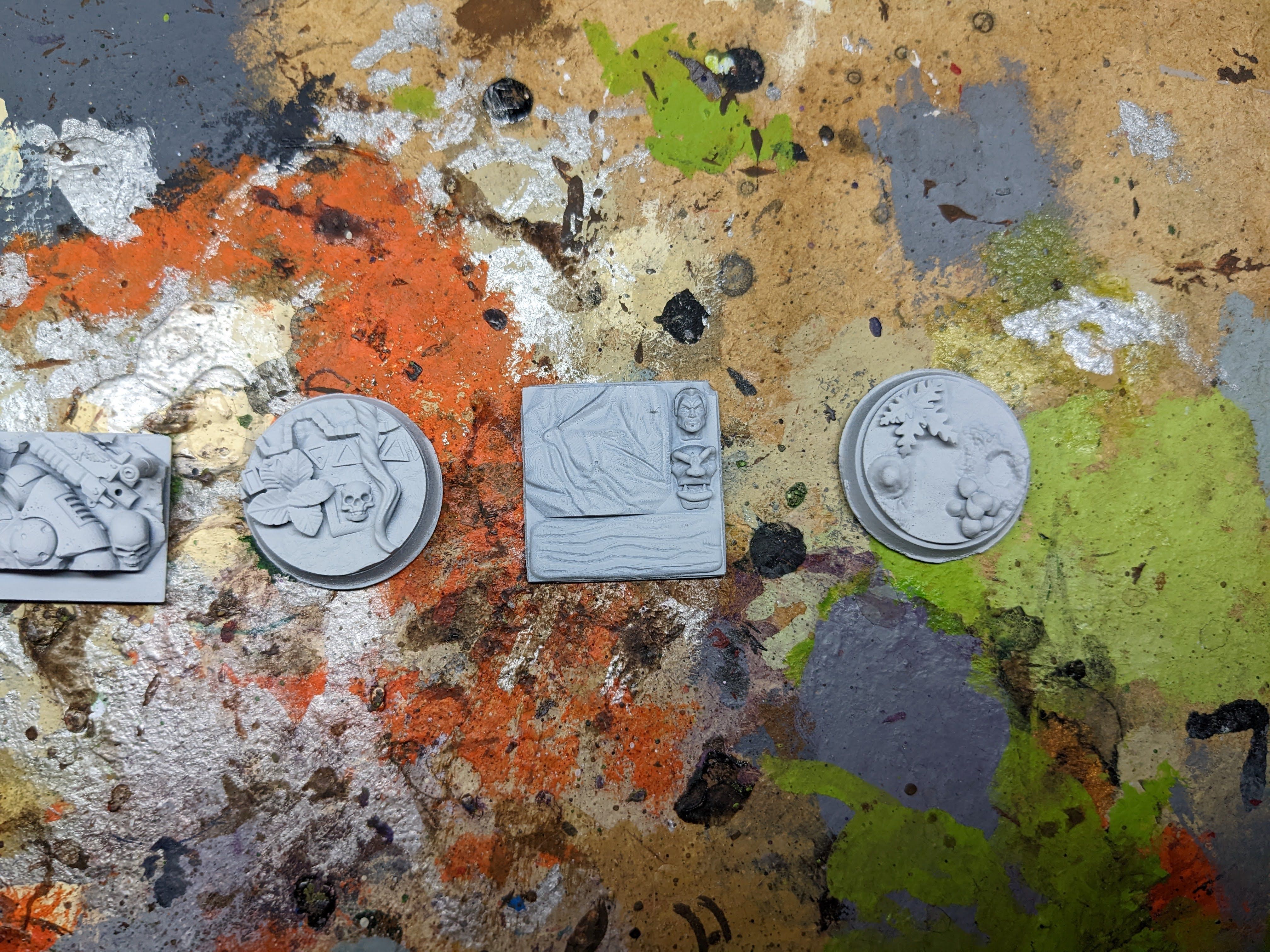
For printer recommendations on the resin side, see the best resin printer for miniatures guide. The same small Mars class printer that handles your infantry will handle these small terrain parts without any change in setup.
Frequently asked questions
Can I print miniatures on these FDM printers?
Not well. Modern FDM machines produce clean results on terrain but layer lines are visible on anything smaller than about 50 mm tall, and fine detail like faces or filigree comes out soft. For characters and infantry, stick with resin. FDM is for everything bigger.
Do I need multi material on day one?
Not strictly, but the AMS on a Bambu or equivalent adds a disproportionate amount of value for terrain specifically. A multi colour building straight off the plate saves hours of basecoat work. If the budget is tight, buy the printer without AMS first and add it later when the budget allows.
How big a plate do I actually need?
For most terrain, 250 mm cubed is enough. Most current terrain ranges are designed modular and split larger pieces into plate sized tiles. If you plan to print single piece cathedrals, keeps, or unusually tall monsters, 300 mm cubed starts to matter.
Open frame or enclosed?
If the printer is only ever used for PLA terrain and lives in a dedicated space, open frame is fine. If it shares a room with anyone, runs overnight, or you want to print ASA for outdoor terrain, enclosed is worth the extra cost.
Is a second hand FDM printer worth it?
Sometimes. A one year old Bambu from a hobbyist moving up is a good buy. A five year old Ender 3 with no mods is not. The current generation has advanced far enough that older machines are rarely worth the savings once you factor in the time spent tuning them.