
Buying Guide
Best Resin for Miniatures
Expensive resin is not automatically better for miniature printing. After years of bottles opened, figures printed, and paintbrush tests done, these are the three resins I actually reach for, the criteria that tell me a new bottle is worth trying, and the safety, washing, and chemistry trade-offs to understand before you order your first kilo.
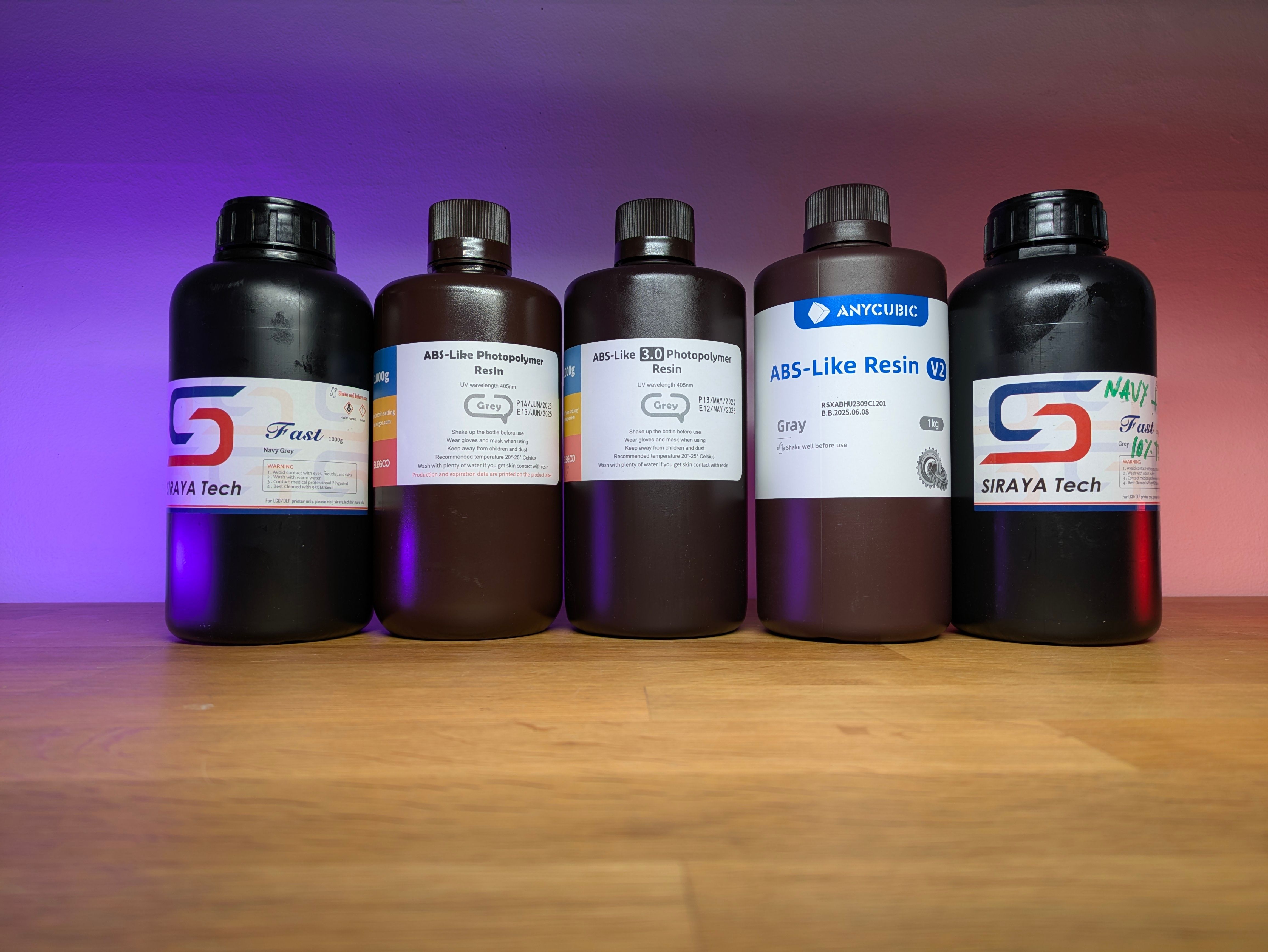
Page last reviewed: 27 April 2026
Some links on this page are affiliate links — marked with aff — and if you buy through them I may earn a small commission at no extra cost to you. Read the full disclosure.
Before you open the first bottle
Every resin on the market, including resins marketed as plant based or water washable, releases volatile organic compounds while it is exposed to air. That is true during printing, during washing, and any time the vat is open. Premium price tags and eco branding do not change the chemistry.
The non negotiable kit:
- An organic compound respirator with replaceable cartridges. Paper dust masks and the included printer mask are not adequate.
- Nitrile gloves every session. Resin sensitisation builds up with repeated skin contact, and once sensitised even small exposures can trigger a reaction.
- Eye protection whenever you handle liquid resin or pull a print off the build plate.
More on workspace setup, ventilation, and what an "adequate" printing space actually looks like is in ventilation and safety for home resin printing.
What actually matters in a miniature resin
Resin pricing does not reflect print quality the way most hobbyists assume. The premium bottle on the shelf is often priced for a speciality use case (dental, engineering, tooling) or for a marketing budget that has nothing to do with the chemistry. Strip away the marketing and only four variables matter for 28mm and 32mm miniature printing.
Detail retention. Can the resin hold fine detail like faces, filigree, chainmail, and fabric folds? Most mid priced miniature resins hold detail perfectly well at 18 to 25 micron pixel size. You do not need to pay extra for it.
Flexibility. Pure stiffness is the enemy of a miniature. A rigid resin prints sharp but shatters when dropped off the table, snaps at thin sword blades during painting, and splits at cape edges during priming. The best miniature resins sit in the middle of the flex scale. Stiff enough to hold detail. Flexible enough to survive your thumb.
Ease of use. Some resins need exact temperatures, specific shake schedules, and long cure times. A resin you cannot realistically use every time is not a resin you will actually use. The best miniature resins forgive a bit of laziness.
Cost per figure. Resin is consumable. A small saving per bottle becomes a meaningful saving across a year of printing. Price per millilitre matters more than price per bottle.
Why expensive resin is not automatically better
When you pay a premium for a bottle of resin, you are usually paying for one of three things. None of them make a resin better at printing miniatures.
- A speciality formulation for a non miniature use case (dental, engineering, high temperature tooling, casting).
- A branded partnership with a well known sculptor, studio, or printer manufacturer. Often the same chemistry as a cheaper bottle with a different label.
- A marketing budget that has nothing to do with the chemistry in the bottle.
A $60 bottle of dental resin will give you a very firm, very pale, very expensive miniature that chips when dropped. A $50 branded bottle from your favourite sculptor is frequently the same formulation as a $25 generic resin. The premium price sets the expectation. The expectation sets the disappointment when the prints come out identical or worse.
That is not the same as saying cheap is always better. There is a floor. The cheapest, most obscure resin on a random marketplace listing will often be a product you should not put anywhere near your printer. Uncalibrated exposure curves, inconsistent batches, horrific smell, and outright toxic formulations are real risks at the very bottom of the market. The point is that the relationship between price and quality flattens quickly above the floor. Once you are in the mid market, paying more does not get you more. Sometimes it gets you less.
Top picks
The three resins I actually use
One general purpose bottle for most work, one flex and detail focused bottle for character models, and one budget workhorse for everything else.
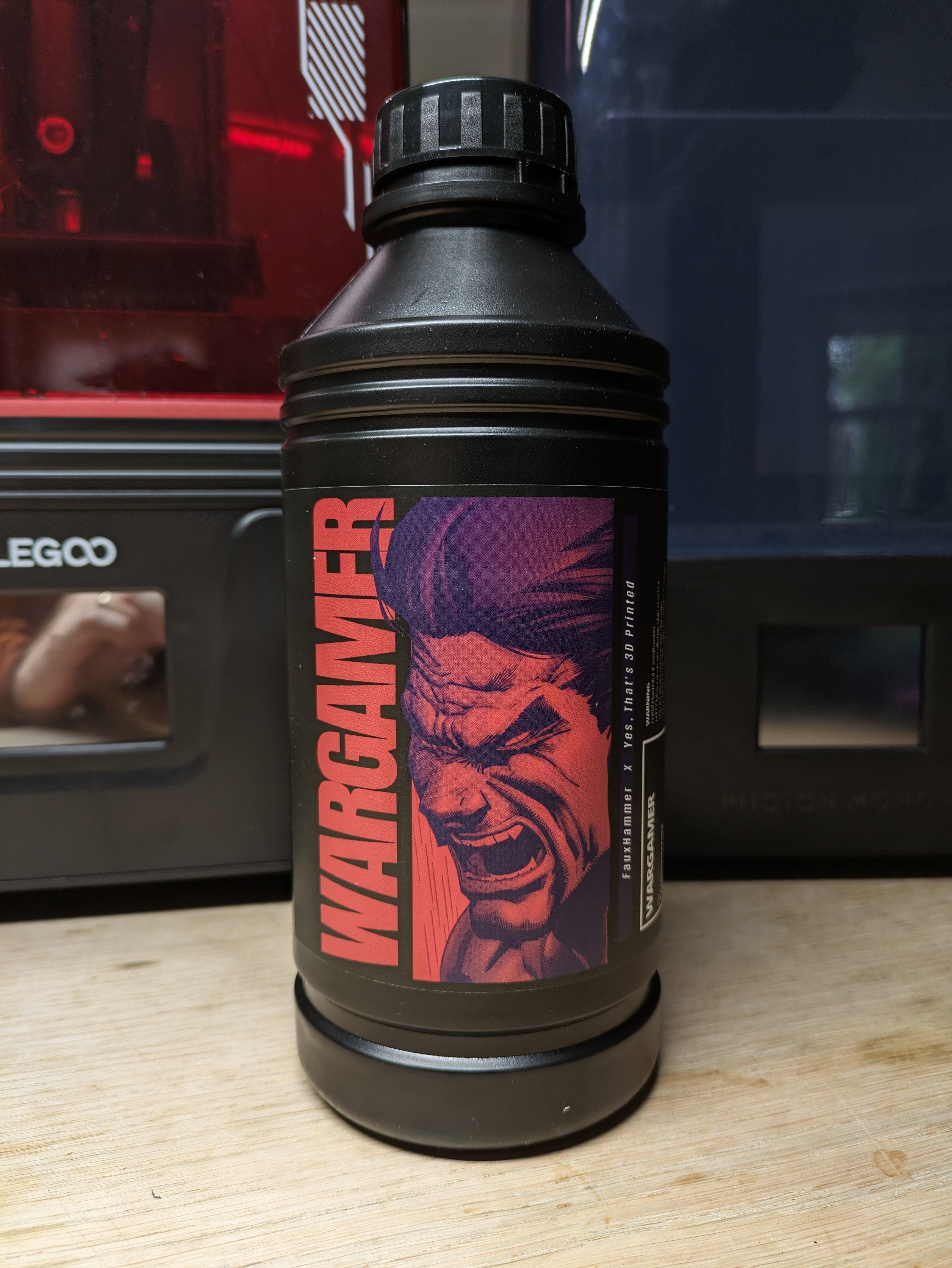
Best all rounder
Wargamer Resin
Purpose built for printing miniatures. Flexible enough to survive being dropped off the table, stiff enough to hold faces and filigree. The resin I point beginners towards first, and the one I reach for most often myself.
- Flex
- Medium
- Detail retention
- Excellent
- Ease of use
- Very forgiving
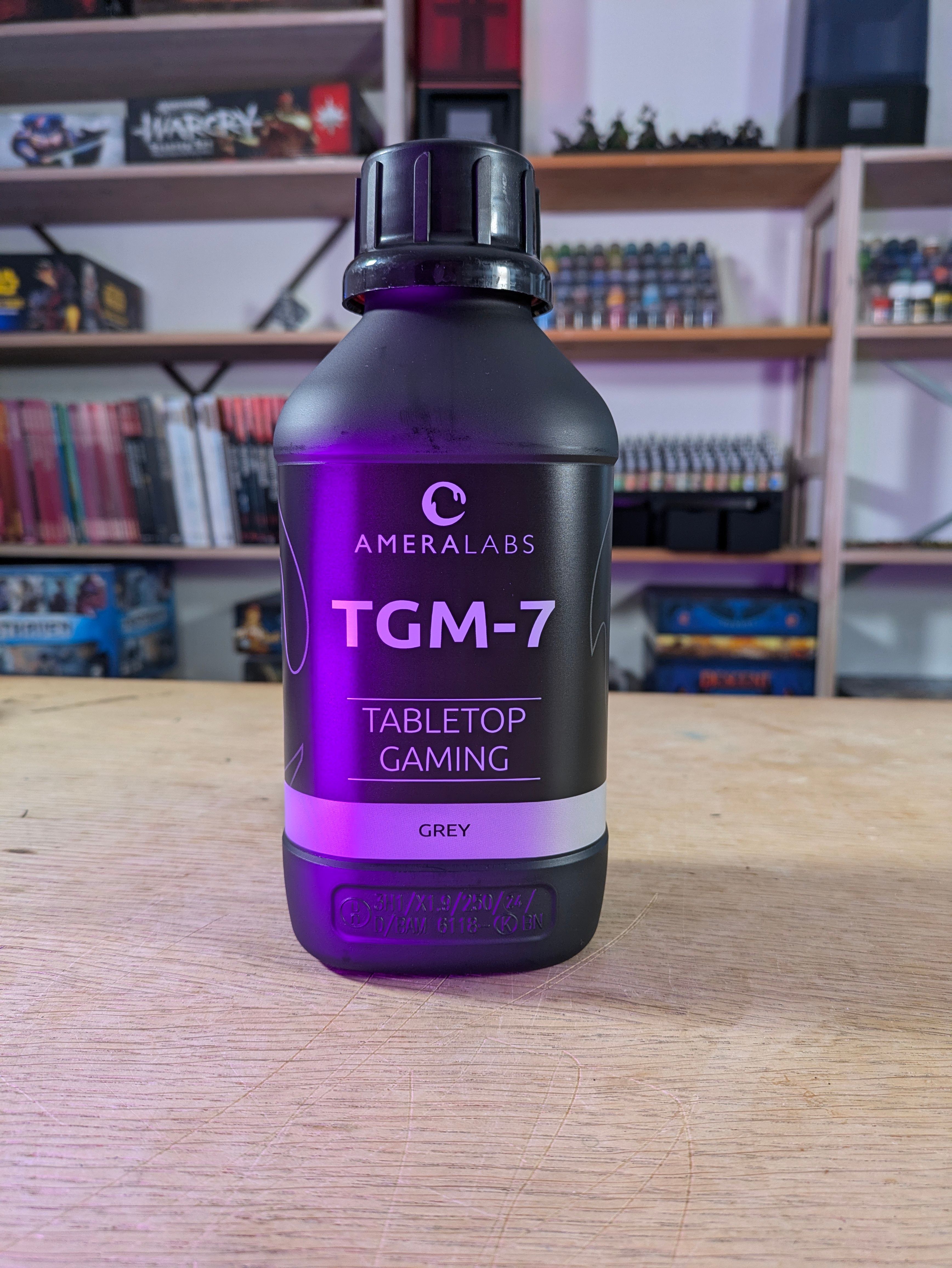
Best detail and flex combination
TGM-7
More flexible than Wargamer Resin with genuinely excellent detail retention. Prints survive repeated handling during painting, which matters more than most hobbyists realise. The flex makes supports and cleanup a bit harder, so it rewards a dialled in workflow rather than beginner habits.
- Flex
- High
- Detail retention
- Exceptional
- Ease of use
- Needs calibration
Best budget workhorse
Sunlu ABS-Like
The cheap workhorse. Dependable, predictable, and affordable enough to buy in bulk. Not the most flexible option on the list and detail is a notch below the Wargamer bottle on very fine work, but for rank and file, terrain, and everything that is not a hero character, nothing beats it on value.
- Flex
- Low to medium
- Detail retention
- Good
- Ease of use
- Forgiving
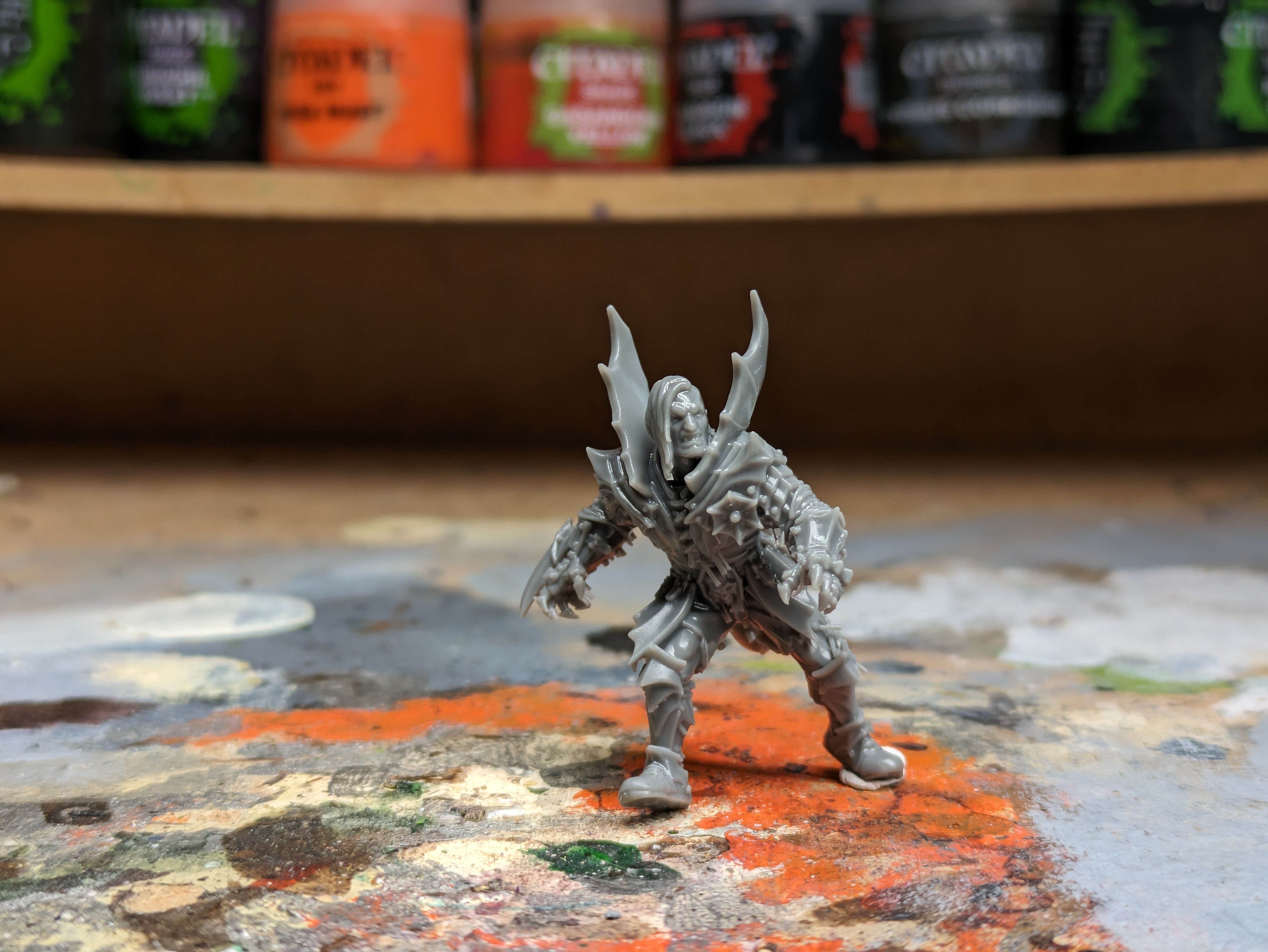
Full comparison
Every bottle in the database
Curated to the resins worth knowing about for miniatures. Sorted by brand. Prices are the lowest USD I have seen per bottle, not the live retail price. Editorial fields that are blank are a deliberate placeholder until I have finished my own notes on that bottle.
Table last reviewed: Invalid Date
| Resin | Brand | Type | Wash | Best price (USD) | Mechanical | Verdict | Buy |
|---|---|---|---|---|---|---|---|
| AMD-3 | Ameralabs | Standard | IPA | — | Brittle | — | Check price |
| TGM-7 | Ameralabs | ABS-like | IPA | — | Tough | — | Check priceaff |
| Anycubic ABS-Like Resin 2.0 | Anycubic | ABS-like | IPA | $19.99 / 1 kg | Tough | — | — |
| Anycubic ABS-Like Resin Pro 2 | Anycubic | ABS-like | IPA | $28.99 / 1 kg | Tough | — | — |
| Anycubic DLP Craftsman Resin | Anycubic | Speciality | IPA | $38.99 / 1 kg | Tough | — | — |
| Anycubic Plant-Based UV Resin 2.0 | Anycubic | Plant-based | IPA | $24.99 / 1 kg | Standard | — | — |
| Anycubic Standard Resin V2 | Anycubic | Standard | IPA | $23.99 / 1 kg | Brittle | — | — |
| Anycubic Tough Resin 2.0 | Anycubic | Tough | IPA | $39.99 / 1 kg | Tough | — | — |
| Anycubic Water-Wash ABS-Like Resin 3.0 | Anycubic | Water-washable | Water | $29.99 / 1 kg | Brittle | — | — |
| Elegoo ABS-Like Resin 8K V3.0 | Elegoo | ABS-like | IPA | — | Tough | — | — |
| Elegoo ABS-Like Resin Ultra | Elegoo | ABS-like | IPA | — | Tough | — | — |
| Elegoo Plant-Based Resin | Elegoo | Plant-based | IPA | — | Standard | — | — |
| Elegoo Standard Resin V2.0 | Elegoo | Standard | IPA | — | Brittle | — | — |
| Elegoo Tough Resin | Elegoo | Tough | IPA | — | Tough | — | — |
| Elegoo Water-Washable ABS-Like Resin | Elegoo | Water-washable | Water | — | Standard | — | — |
| Elegoo Water-Washable Resin 8K | Elegoo | Water-washable | Water | — | Brittle | — | — |
| Siraya Tech Blu | Siraya Tech | Tough | IPA | $32.19 / 1 kg | Tough | — | Check price |
| Siraya Tech Build | Siraya Tech | Tough | IPA | $31.49 / 1 kg | Standard | — | Check price |
| Siraya Tech Fast ABS-Like Resin | Siraya Tech | ABS-like | IPA | $29.59 / 1 kg | Tough | — | Check price |
| Siraya Tech Fast Mecha White | Siraya Tech | ABS-like | IPA | $29.59 / 1 kg | Tough | — | Check price |
| Siraya Tech Sculpt | Siraya Tech | Speciality | IPA | $31.99 / 1 kg | Brittle | — | Check price |
| Siraya Tech Tenacious | Siraya Tech | Flexible | IPA | $46.80 / 1 kg | Flexible | — | Check price |
| Sunlu 14K Standard Resin | Sunlu | Standard | IPA | $21.00 / 2 kg | Standard | — | Check price |
| Sunlu ABS-Like Resin Course pick | Sunlu | ABS-like | IPA | $16.00 / 1 kg | Tough | — | Check priceaff |
| Sunlu ABS-Like Resin 2.0 Course pick | Sunlu | ABS-like | IPA | $15.00 / 1 kg | Tough | — | Check price |
| Sunlu Water-Washable ABS-Like Resin | Sunlu | Water-washable | Water | — | Tough | — | Check price |
| WARGAMER by FauxHammer | Yes, That's 3D Printed | ABS-like | Either | — | Tough | — | Check priceaff |
Types of resin, and which to ignore
Resin marketing is full of category names. Standard, ABS-like, fast, flexible, tough, durable, water washable, plant based, dental, engineering, high temperature. For miniature hobbyists, most of that language is noise. Here is what each category really means and whether it matters for you.
Standard resin
The cheapest tier, often around $10 a litre. Brittle once cured. Thin spindly parts, sword blades, and fine detail snap easily. Fine for testing exposure on a new printer, fine for terrain that does not need to survive being handled, not what you want for a painted character.
Fast resin
Designed to cure as quickly as possible to reduce print time. The trade-off is significantly more brittle than even standard resin. The speed savings do not compensate for prints that snap during support removal. Skip it for miniatures.
ABS-like resin
The workhorse category. More flexible than standard, more impact resistant, and usually the best value per millilitre. Sunlu ABS-Like sits here and is the reason I pick it for rank and file troops.
Miniature focused resin
A marketing category that actually means something. Formulated for fine detail, sensible flex, and paint adhesion. Wargamer Resin and TGM-7 sit here. Cost more than ABS-like but worth it for character models where the detail matters.
Tough resin (used as a blend)
Siraya Tech Tenacious is the standard tough resin in this conversation. It is not used neat. The recipe is to mix 10 to 20% Tenacious with your ABS-like resin for a noticeably more flexible result that resists snapping at thin parts. Worth experimenting with once the basics are in place. Not a starting point. More on the mixing technique below.
Water washable resin
The category that needs the most explanation, because it has changed. Older water washable resins were brittle and prone to warping, and that reputation was accurate for a long time. The newer formulations, particularly Wargamer water washable, hold up comparably to ABS-like in handling durability without the old brittleness. The workflow benefit is real: water replaces isopropyl alcohol in the wash step, which simplifies the workspace and reduces consumables. The catch is that hollow models do not work well with water washable resin (water trapped inside dries too slowly and the model cracks from the inside). For solid prints, water washable is a legitimate starting choice.
Plant based resin
Marketed as safer because of the bio sourced part. Still toxic. Still releases VOCs. Usually more brittle than mainstream ABS-like. Not recommended.
Tough, durable, engineering, high temperature
These are for functional parts, not miniatures. Tough resin is too stiff to flex and will chip at fine details. High temperature resin is formulated for injection mould masters. Engineering resins are for brackets and housings. Do not buy these for printing characters.
Dental resin
Yes, dental resin will print a miniature. It will also cost three times the price, smell strongly, and produce a very firm figure that chips when you drop it. Unless you have a reason, ignore it.
What is actually in a bottle of resin
Once you understand the small set of physical properties that distinguish one bottle from another, the marketing categories above start to make sense as different points on the same chemistry map. There are not that many properties.
- Every resin cures under UV light. That is the entire premise of the technology.
- Some resins are formulated to wash off in water. Others claim to be and are not.
- Every resin emits volatile organic compounds while in the vat and during curing. Eco, plant based, low VOC, and no VOC marketing terms are mostly marketing.
- The strength of a cured resin is a combination of flex, tensile strength, and impact resistance. These move together but not in lockstep.
- Low viscosity, runny resin tends to be brittle and cures faster. High viscosity resin needs slightly more cure time per layer.
- Viscosity changes with temperature. So does the ideal exposure time. A resin printed at 20 degrees behaves differently from the same resin at 25 degrees. Stable warm temperatures, ideally around 25 degrees Celsius, are preferred for predictability.
- The colour of a resin can affect its cure behaviour. The same chemistry in two different colours can need different exposure times.
- Clear resin is a category of its own and is a pain to work with.
- Cost varies enormously, and the relationship between cost and quality is much weaker than the price tags suggest.
The mixing trick worth knowing
If you do not want to commit to a full bottle of an expensive tough resin but want better durability than a basic resin will give you, the recipe most experienced hobbyists use is mixing. Buy the cheap basic resin in bulk, pour in 5 to 10% of a flexible additive resin. Siraya Tech Tenacious is the standard pick. The majority of your bottle stays cheap, the prints come out noticeably more durable, and the cost per figure is barely above the basic resin alone.
You can also mix ABS-like with a tough resin in similar proportions for a slight further bump in flex without paying for full tough resin.
A small bonus: when you have a partly empty bottle of one resin and you want to start a different one, just pour the leftovers into the new bottle. Resin chemistries in the same family mix without drama. Do not waste a quarter bottle out of caution.
The honest caveat is that mixing introduces variability. The exposure time that worked for the unmixed bottle will not be exactly right for the mixed one, mix ratios matter, and a sloppy stir gives inconsistent prints. For a beginner I default to a single bottle of a good ABS-like until the workflow is steady. Mixing is a tier two move.
It is also worth noting that ABS-like resins have been converging in their properties over the last couple of years. Elegoo, Anycubic, Sunlu, and Siraya Tech ABS-like bottles all behave more similarly than they used to, almost as if a small number of factories are producing similar base chemistry under different labels. The practical effect is that your choice between ABS-like brands is mostly price and availability rather than meaningful chemistry differences.
Water versus alcohol washing: which workflow to choose
The choice of resin shapes the rest of your workflow, because the wash step decides whether you keep isopropyl alcohol or water around the bench. Both work. Neither is obviously superior.
Water washable simplifies the post processing setup, reduces consumables, and makes waste disposal more straightforward. The trade is that hollow models do not work well (trapped water cracks the model from the inside as it dries) and print durability has historically lagged ABS-like, although the gap has closed.
Isopropyl alcohol works for any resin, including water washable. The three container method (Dirty, Less Dirty, Wash Station) keeps the wash quality consistent without replacing all of your IPA at once. Disposal is straightforward as long as you let contaminated IPA evaporate in sunlight outdoors rather than trying to distil it.
For a first bottle and a first month, water washable is the smaller commitment. Once your settings and workflow are dialled in, switch to whichever resin fits the print. Do not switch resins for the first month or two. A consistent resin is a consistent variable.
Colour, and the 4K and 8K marketing claim
Grey is the right starting colour for almost all miniature printing. Grey gives enough contrast to see surface detail clearly during support removal and quality inspection. Transparent resins make it very difficult to see what you are doing during support removal. White and black resins exist but tend to have slightly different printing characteristics that make them harder to calibrate as a starting point.
Some resin sellers market bottles as "4K" or "8K" compatible. This refers to the screen resolution of the printer rather than a property of the resin. Print resolution depends on your printer's screen resolution and pixel size, not on the resin. The 4K resin labelling is marketing and does not mean the resin is specially formulated for higher resolution screens. Ignore the K number on the bottle.
How I test a new resin
When a new bottle appears on the market, four tests tell me whether it is worth keeping in my workflow.
- Run the printer's built in exposure calibration test (RERF on Elegoo machines, equivalent on others) and confirm that the recommended exposure works. Poor calibration documentation is a warning sign. The RERF read guide covers how to interpret the result.
- Print a miniature with fine detail, wash and cure it properly, and drop it onto a hard floor from waist height. If it survives, the flex is in the sensible range. If it shatters, the resin is too brittle for miniature use.
- Prime and paint a test model. If the primer beads or paint adhesion is poor, the resin is curing incorrectly or the wash has not fully cleared uncured residue. The post processing guide covers what each symptom is telling you.
- Track cost per figure across a month of actual printing. The cheap bottle that prints twice as many figures for the same money is the cheaper bottle, regardless of shelf price.
Four tests, four honest data points. Trust those over the marketing.
Frequently asked questions
How toxic is resin while printing?
Every resin on the market emits volatile organic compounds during printing and curing, including bottles labelled plant based or low VOC. Treat all uncured resin as a skin and respiratory irritant. Nitrile gloves, ventilation, and a tidy workflow are not optional. Cured prints are inert.
Is expensive resin worth it for miniatures?
Rarely. Wargamer Resin and TGM-7 are mid priced bottles that outperform several premium options on detail and durability. The price ceiling for resin worth buying for miniature work sits well below the most expensive bottles on the shelf. Spend the saved money on more resin or on paint.
Should my first bottle be water washable or alcohol washable?
Water washable for the first month or two. It simplifies the workspace, removes the need for a litre of isopropyl alcohol on hand, and current formulations are durable enough for solid prints. Switch to alcohol washable once the workflow is steady, especially if you start hollowing models, because trapped water cracks hollow prints from the inside.
Can I mix two different resins together?
Yes, within reason. Mixing 5 to 10 percent of a flexible resin like Siraya Tech Tenacious into a basic ABS-like bottle is a common recipe for more durable miniatures without paying premium prices. Mixing partial bottles of resins from the same family is also fine. Do not pour out a quarter bottle out of caution.
Does a 4K or 8K label on the bottle matter?
No. The K number describes the printer screen, not the resin. Resin is not formulated for a specific screen resolution. Ignore the marketing badge and read the properties on the bottle instead.
What colour resin should I buy first?
Grey. Grey gives enough contrast to see surface detail during support removal and quality inspection. Clear, transparent, and white resins are all harder to read on the bench and tend to have slightly different printing characteristics that make a first calibration harder.
The short version
Buy Wargamer Resin for most work. Buy TGM-7 when detail and flex matter on character models and you have your wash and cure workflow dialled in. Buy Sunlu ABS-Like for bulk work where the figures do not need to be exceptional. Ignore the expensive bottles with loud branding. Spend the money you saved on paint.
If you are new to resin printing entirely, start with the clean beginner setup guide. For the opinionated version of what I would actually do if starting today, including which bottle I would reach for first, see how to start resin printing miniatures.