Some links on this page are affiliate links — marked with aff — and if you buy through them I may earn a small commission at no extra cost to you. Read the full disclosure.
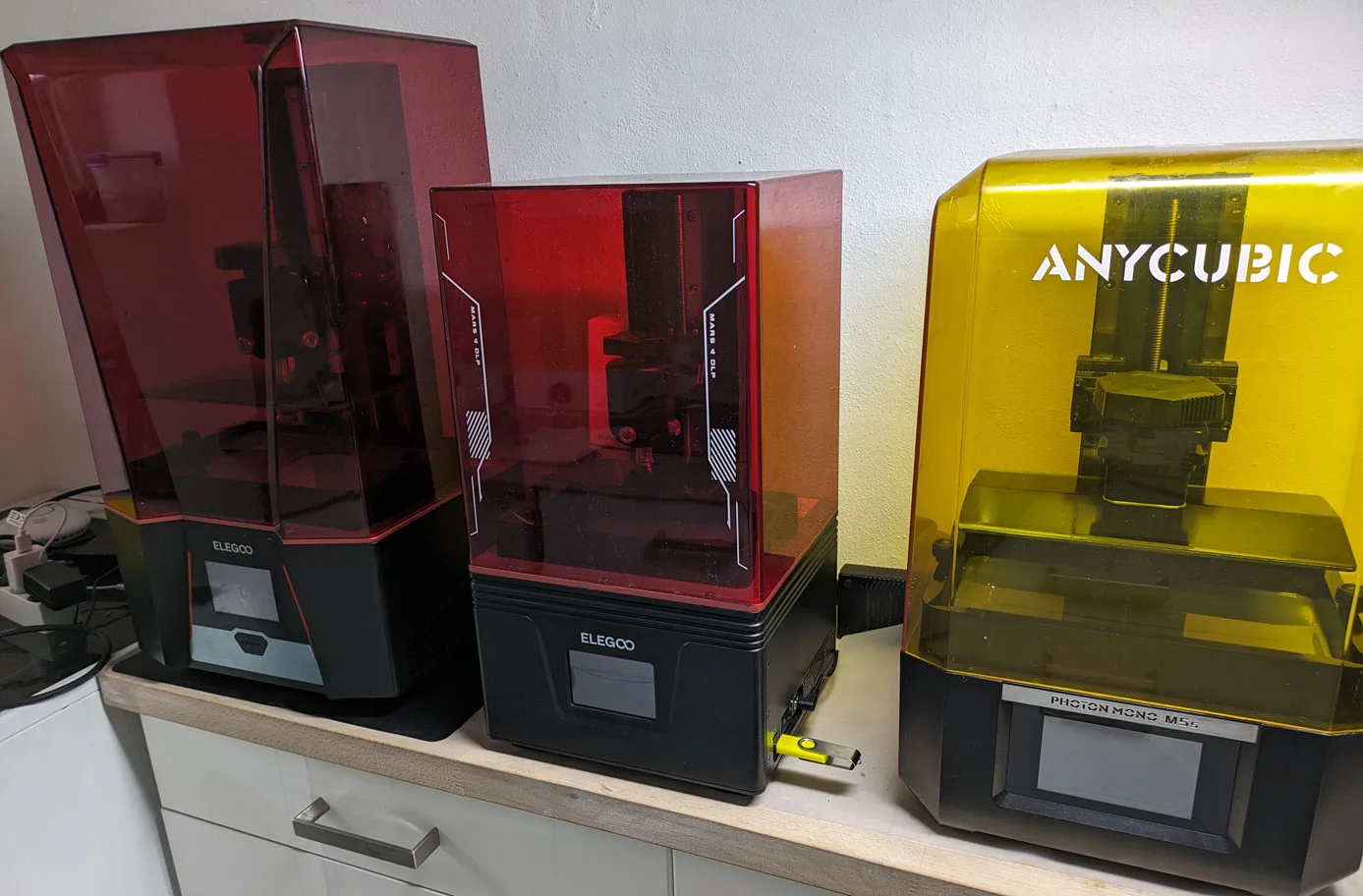
Most of the printer advice online is about what to buy new. That is fine if your budget allows it, but it misses half the market. Good resin printers from 2023 and 2024 are sitting on eBay, Facebook Marketplace, and local hobbyist groups for a fraction of their launch price. Some of them are better miniature printers today than a lot of newer machines at twice the money.
This article is about which second hand printers are worth buying in April 2026, which ones are not, and what to check before handing over money for a machine that someone else has already used.
Why second hand is worth considering
Resin printer technology has advanced quickly, but the advance is narrower than the marketing suggests. An 18 micron pixel printer from 2023 prints sharper miniatures than most 2022 printers, and the gap between 18 micron and the latest 14 micron flagships is very hard to see without a magnifier at 32mm scale.
What has changed more noticeably since 2023 is the feature set. Tilting VATs, auto levelling, heated chambers, and wifi are all newer additions. None of those features print the model. The screen and the pixel size print the model. A 2023 printer with a good screen will produce prints that look identical to a 2026 printer with a good screen, minus some convenience features.
That gap between “features” and “results” is where second hand buying pays off. You get the results of a newer printer at the price of an older one.
The two printers I would actually buy second hand
If you forced me to narrow this entire article to two recommendations, this is what I would say. Both are 2023 generation Elegoo machines, both still hold up beautifully in 2026, and both are routinely available second hand at prices that embarrass the new market.
Elegoo Mars 4 Ultra (small format)
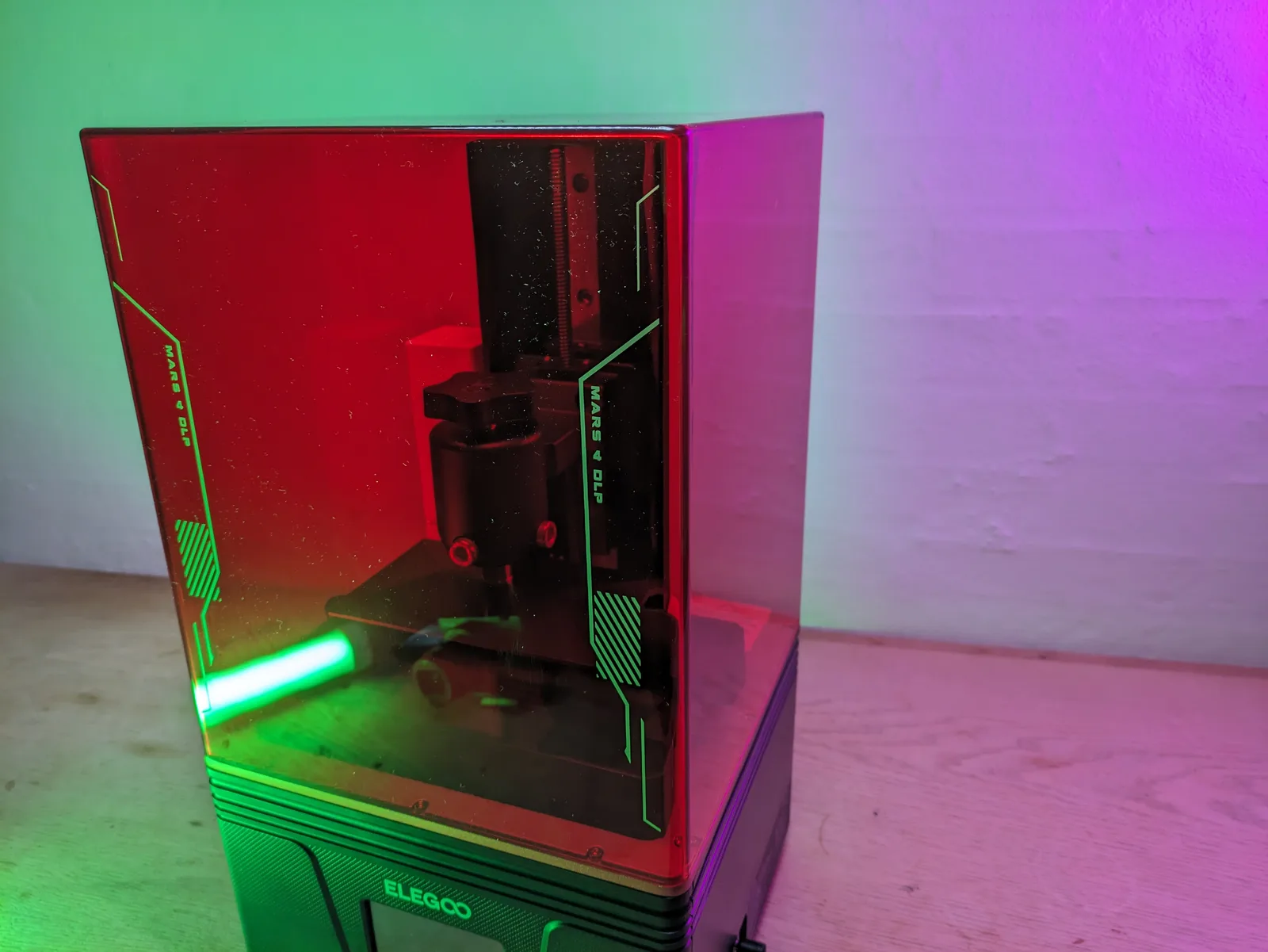
The Mars 4 Ultraaff is the value benchmark for a small format second hand printer.
- 7 inch screen with 18 micron XY resolution, which is still top of the class for small format
- ACF release film instead of PFA, which is an unusual choice but works fine
- Build volume of 153 by 77 by 165mm, generous for miniatures and tight for larger prints
- 4 screw levelling system, which is a real improvement over the 2 screw setup on older Elegoos
- Tempered glass over the screen, acting as a built in reusable screen protector
- Optional wifi that is not great but is there
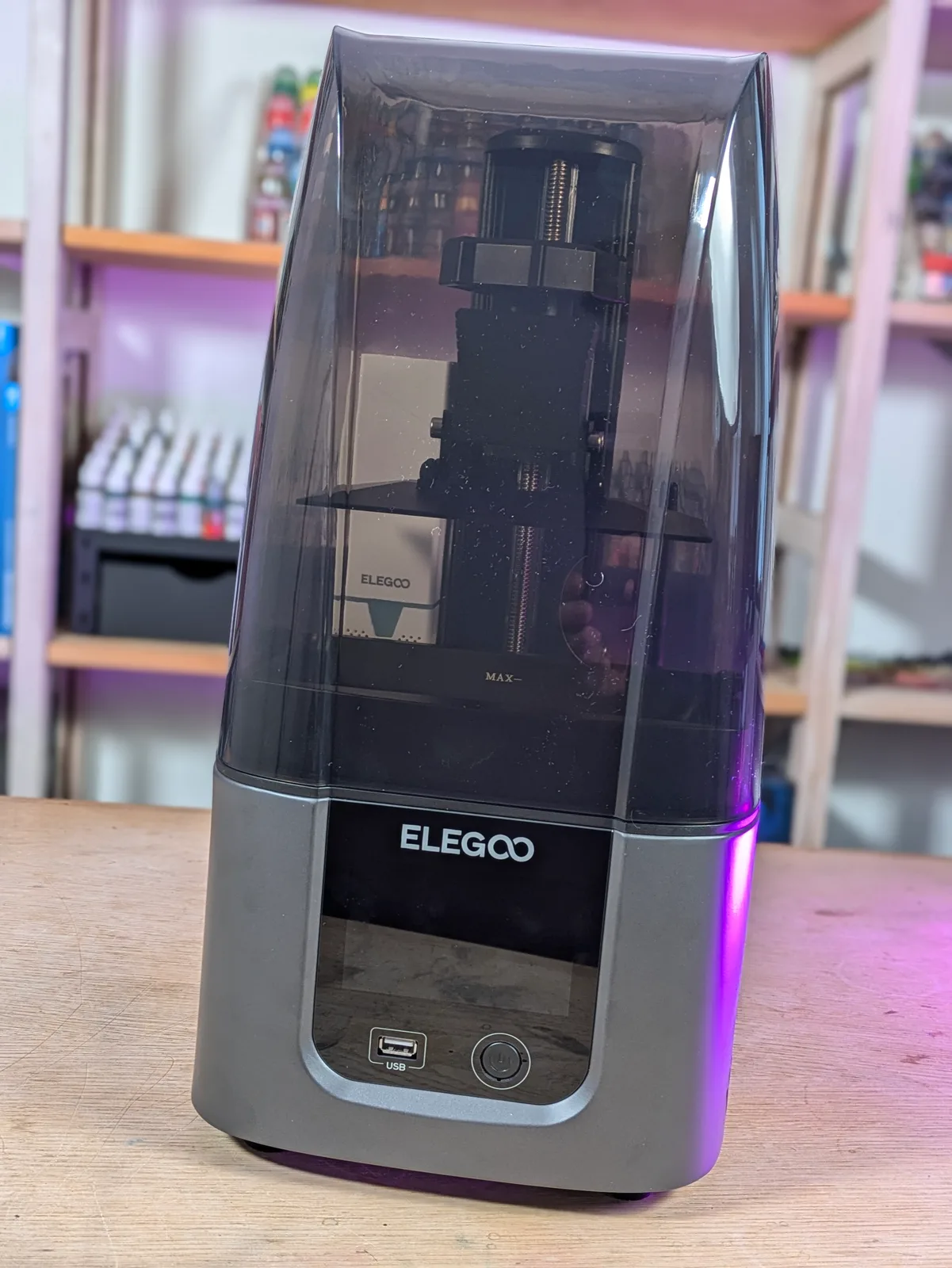
Best price I have seen on the second hand market is around $170. At that price it is an outright steal. If a seller is asking over $200, I would skip it and look at the Anycubic Photon Mono 4 instead, which is a closely matched alternative without the tempered glass or wifi but with better screen longevity and built in RERF calibration.
A specific warning that catches a lot of buyers out: get the Ultra specifically, not the standard Mars 4aff. The standard Mars 4 is locked to Elegoo’s GOO file format, and GOO does not properly support anti aliasing. That gives you visibly stepped edges on flat surfaces and there is no clean workaround. The Ultra version handles anti aliasing properly. The price gap second hand is small. Spend the extra $30 to $40.
Full long-form take in the Mars 4 Ultra review.
Elegoo Saturn 3 (mid format workhorse)
The mid format companion to the Mars 4 Ultra. Where the Mars 4 Ultra runs out of build volume, the Saturn 3aff picks up.
- 219 by 123 by 250mm build volume, room for a full plate of 32mm infantry or a centrepiece bust
- 24 micron XY resolution, sharp enough for miniatures and well supported by anti aliasing
- No wifi, no smart features, but tempered glass over the screen is included
- Second hand price sits around $150 to $180, against a new price that has hovered around $230 to $260
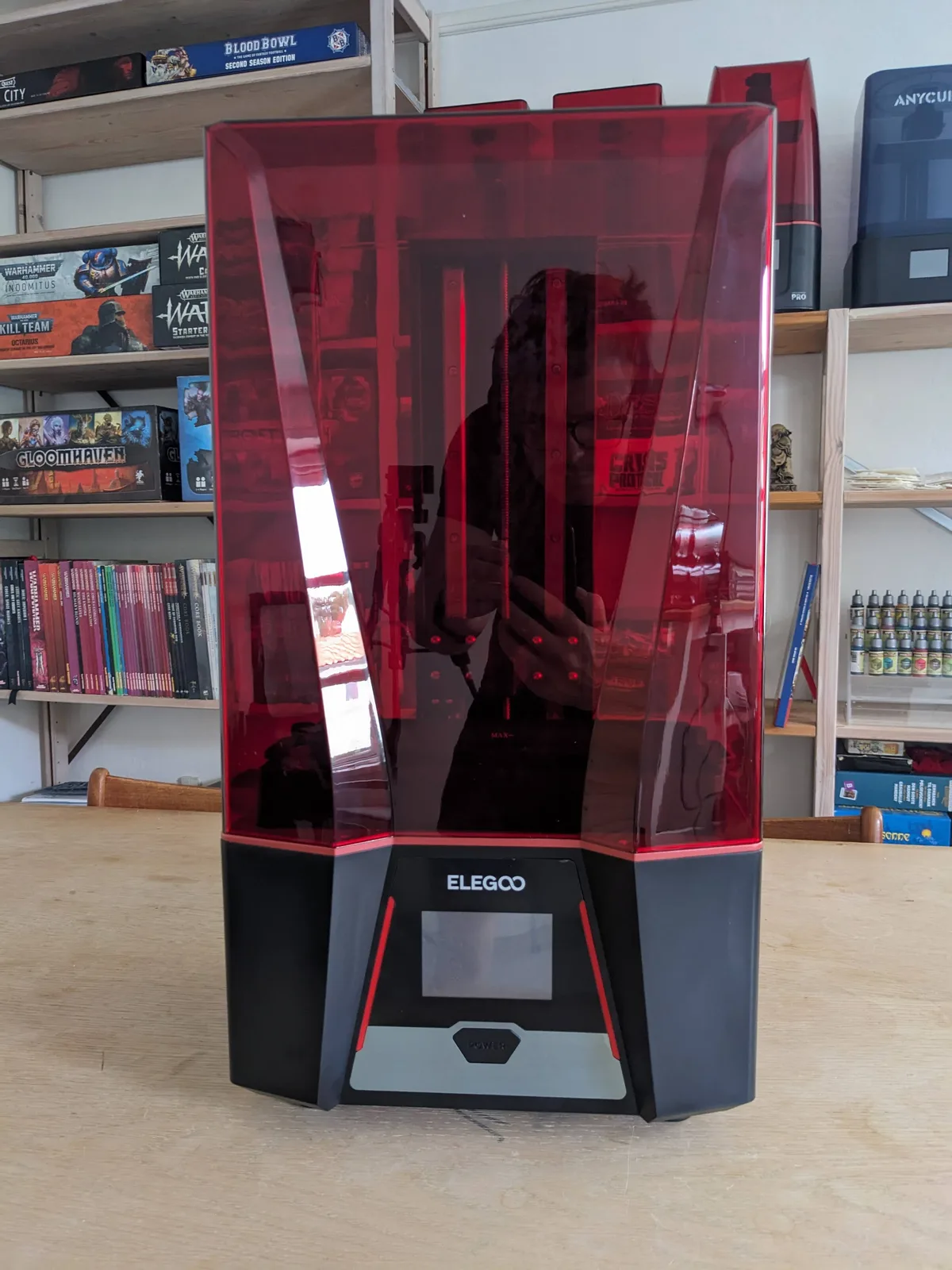
The Saturn 3 has no generational weak points, no smart features that can fail, and a feature set that ages well. A quiet, reliable machine.
The natural question is whether to step up to a Saturn 4 Ultra 16K or a UniFormation GK3 instead. Both are noticeably more expensive on the second hand market and the gain in print quality is small enough that you would struggle to spot it on a painted miniature. Doubling the cost does not double the result. The Saturn 3 wins on value.
Full long-form take in the Saturn 3 review.
Other second hand printers worth chasing
If you cannot find one of the two above at the right price, the following are also fair second hand picks. None are quite the value of the Mars 4 Ultra or Saturn 3, but each one has a use case where it makes sense.
Elegoo Mars 3 Pro
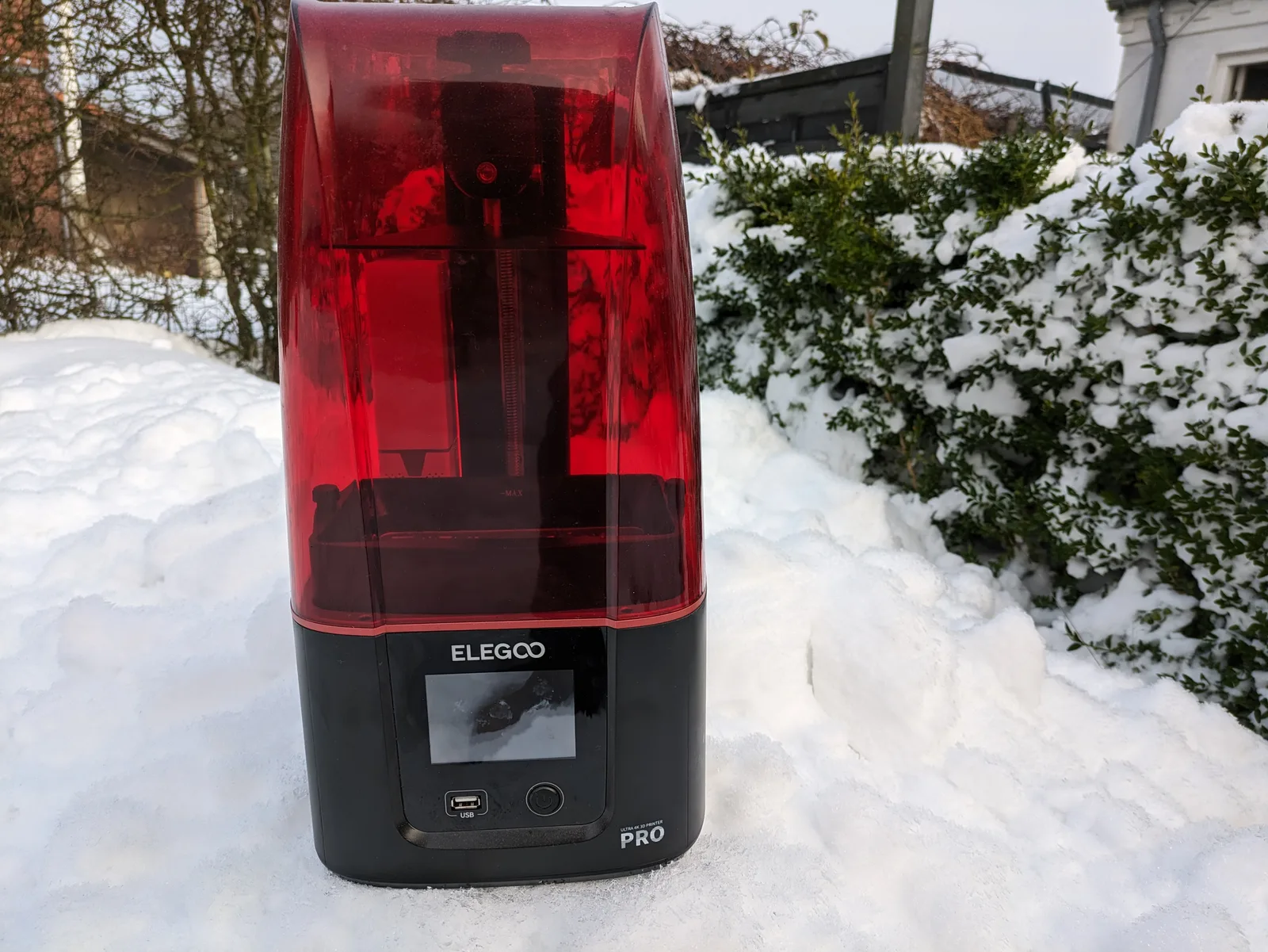
For a long stretch the Mars 3 Pro was the beginner printer I pointed everyone at. 35 micron pixels, tempered glass screen protection, a carbon filter with replaceable carbon. As long as you understand that the Mars 4 Ultra prints noticeably sharper for not much more money, the Mars 3 Pro is a perfectly fine second hand option at around $60 to $80. The tempered glass alone is worth it.
The thing to check is whether the previous owner replaced the LCD screen at any point. If the hour count is high and the screen has not been changed, factor in a $30 replacement screen to your budget.
Full long-form take in the Mars 3 Pro review.
Elegoo Saturn 2
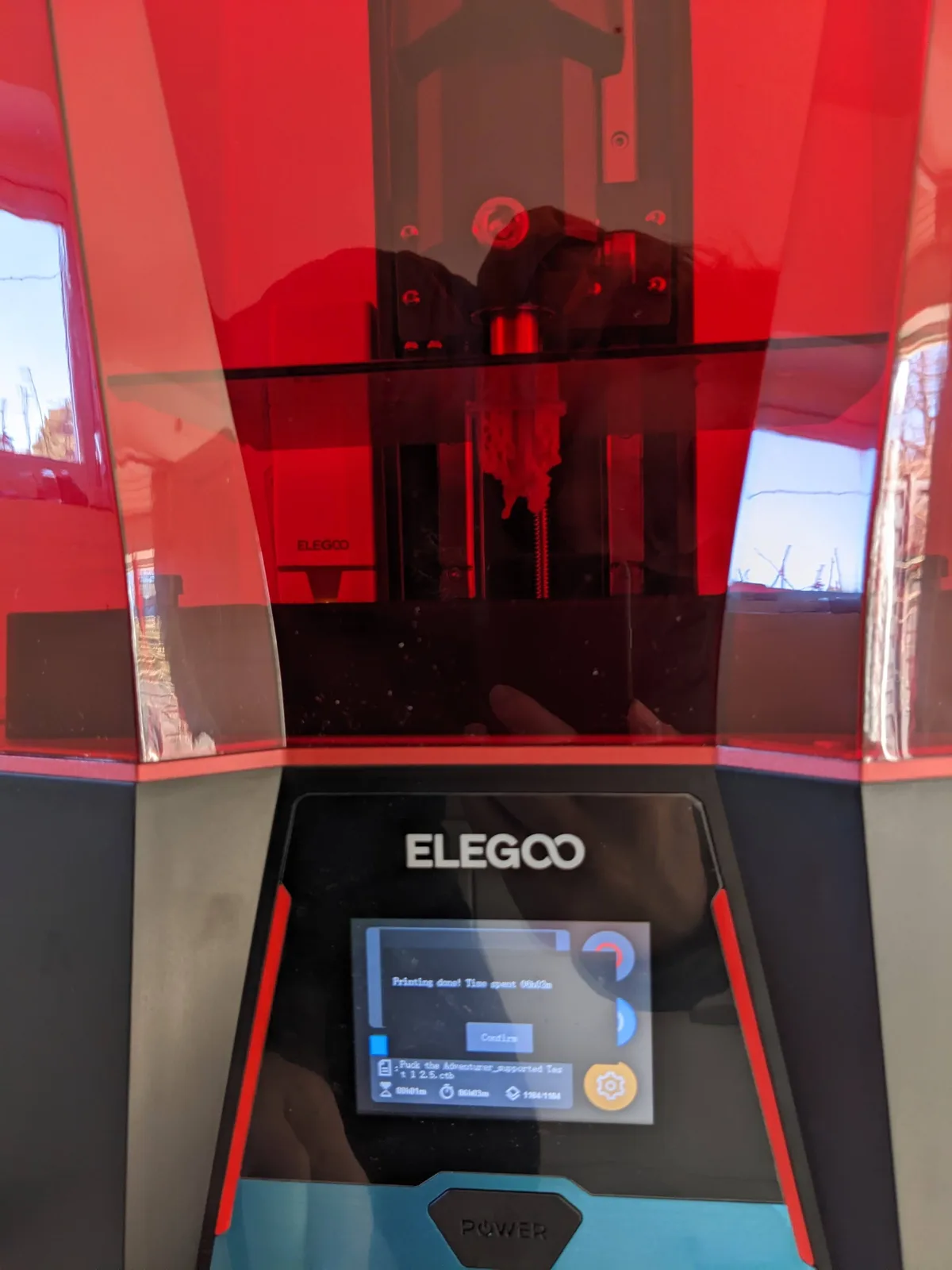
A genuine beast in its day. The handling was a huge improvement over the Saturn 1, the pixel size of 28.5 microns is still comfortably sharp for miniatures, and tempered glass screen protection was standard. I have been running mine for years.
Second hand price sits around $100 to $150. For a big build plate printer that can handle infantry batches or scenery, that is remarkable value. Check the screen for burn in and the VAT film for damage.
Full long-form take in the Saturn 2 review.
Elegoo Mars 4 (the standard one, with the GOO caveat)
If you find a standard Mars 4 going cheap and you genuinely do not care about anti aliasing for the kinds of models you print (mostly characters with minimal flat surfaces), it is a fine machine for $90 to $110. For most buyers the Mars 4 Ultra is the better pick at a small premium, but the standard Mars 4 is not a write off.
Full long-form take in the Mars 4 review.
UniFormation GKtwo
An interesting second hand option if you find one. 30 micron pixels on a Saturn sized plate plus a heated VAT that solves a long list of cold room problems. Second hand prices are falling as the GK3 line takes over, so this used to be $650 new and can often be found second hand at $300 to $400. For someone who wants a printer that works reliably in a cool workshop, that is a strong buy.
Check that the heater still works. It is the feature you are paying for. Also check that the seller has the original screen protector installed or available.
The second hand printers to avoid
Not every cheap older printer is a bargain. Some are simply old.
Anything from the original Mars line
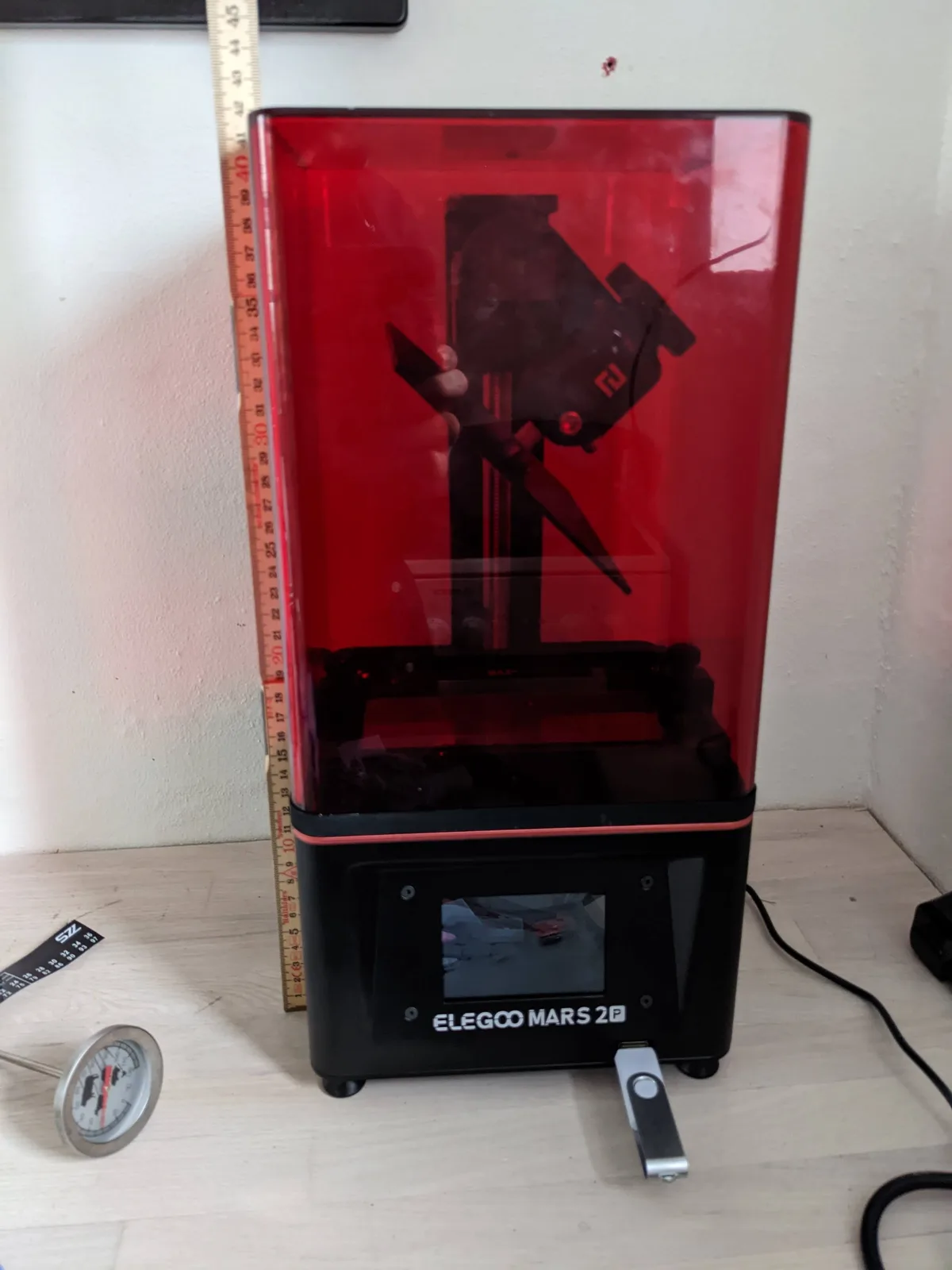
Mars 1, Mars 1 Pro, Mars 2, Mars 2 Pro. These were important in their day. They are museum pieces now. The pixel size is too large for crisp 28mm miniatures, and the non mono or early mono screens have limited remaining life. Even at $40 on a marketplace, you will get prints that feel a generation behind.
Anycubic Photon Mono X and Photon Mono X 6K
The pixel size is too large for miniature work and the ecosystem is moving away from this line. Anycubic has quietly stopped supporting older firmware updates for some of these, which makes troubleshooting harder than it should be. Skip.
Any Creality resin printer from 2023 or earlier
This is not personal. Creality’s resin quality control has been inconsistent, and their resin focus has shifted almost entirely to FDM in the last year. Second hand Creality resin printers come up cheap because original owners often had frustrating experiences with them. The price is low for a reason.
First generation DLP machines
Anycubic Photon Ultra, Anycubic Photon D2. I like DLP printing. The first generation consumer DLP machines were not good enough to be worth the second hand price, and the parts are now hard to source. Wait for newer DLP technology rather than chasing legacy.
Anything with an unknown screen hour count
LCD screens in resin printers are consumables. They are commonly rated at around 2,000 hours of exposure time, with hobbyist usage typically lasting longer than heavy daily printing. If a seller cannot tell you how many hours are on the screen, assume the worst and factor in a replacement screen to the price.
What to check before you buy
Treat a second hand printer purchase like a used car inspection. Ask for or inspect the following before handing over money:
- Hour count on the current screen. Most printers track this in the machine’s settings menu. If it is well past a thousand hours, budget for a replacement screen as a precaution.
- Build plate condition. Look for scratches, dents, or flatness issues. A dented build plate causes levelling problems that are hard to fix.
- VAT film condition. A cloudy, stretched, or punctured film needs replacing. Replacement films are cheap, but factor them in.
- Screen for burn in. Power the printer on and look at the LCD. Persistent dead pixels or image burn in are signs the screen is at the end of its life.
- Original accessories. Scraper, funnel, spare VAT films, gloves, and especially the original resin bottle. Missing accessories suggest a seller who did not take care of the machine.
- Original manuals and software. Some older Anycubic and Creality machines need specific firmware versions for certain slicers. Original software is useful.
- Physical condition of the chassis. Scratches are cosmetic. Rust on internal components is a problem. Check for resin spills that were not cleaned up, which can damage motors and rails.
If the seller is local, ask to see the printer run a short test print before you buy. If they refuse, walk away. A seller unwilling to power on the machine is usually a seller who knows something is wrong.
Where to look
eBay is the largest market but also the most picked over. Prices on eBay are usually within a small margin of what the unit is actually worth.
Facebook Marketplace and local hobbyist groups consistently produce better deals because the sellers want the printer gone and are willing to negotiate on price. Meeting locally also lets you inspect before buying.
Reddit has dedicated hobbyist buy and sell threads (r/resinprinters and others). Prices tend to be reasonable because sellers are usually hobbyists themselves rather than resellers.
Avoid Craigslist for mid to high priced items unless you are able to inspect in person. The scam rate is too high at the $300 plus mark.
A note on smart features and the bear favour
The biggest selling points on 2024 and 2025 printers have been tilting VATs and auto levelling. They both sound great. They are not always great.
Auto levelling is not yet reliable enough that I would trust it without a manual override. When auto levelling fails, the print crushes itself into the build plate and you now have a different problem to solve, often in the middle of the night. Tilting VATs are genuinely faster but they make screen replacements much harder. If you crack a screen on a tilting VAT machine, the disassembly is involved enough that some people just buy a new printer instead.
In Danish there is a phrase, bjørnetjeneste, which translates roughly as bear favour. It describes a well meaning gesture that ends up making things worse rather than better. The current generation of smart features on resin printers is largely bear favour territory. The intent is to make printing easier. The result, when the smart feature fails, is a new problem the user did not have on the older simpler machine.
This is part of why second hand 2023 generation Elegoos hold up so well. There is less to fail. The features that matter (the screen, the build plate, the VAT, the tempered glass cover) are all there. The features that can fail in interesting ways (auto levelling, tilting VATs, AI sensors, cloud connectivity) are not. For a beginner especially, that simplicity is a feature in itself.
When the smart features actually start to improve print reliability rather than introduce new failure modes, the calculation will change. Not yet.
The bottom line
A 2023 Saturn 2 for $120 is a better miniature printer today than a 2026 budget machine at twice the price. A 2024 Mars 4 Ultra for $170 is an extraordinary value, and the Saturn 3 at $150 to $180 is the mid format companion. The printers to chase second hand are the ones where the screen and pixel size still match the current market, and the features you are missing are convenience features rather than print quality features.
For the new printer picks in April 2026, see the best printer buying guide. For the case for buying new right now, and why the 2026 market is worth buying into at all, read why 2026 is still the best year to buy a resin 3D printer. For what actually matters in a printer before you start spending, read the clean beginner setup article first so you are not paying for features you do not need regardless of new or used.